
Completionist Route Planning for Roblox Games: Badges, Rooms, and Checklists
A completionist route-planning method built on Clean the Supermarket: write a target checklist, group objectives into routes, sweep zones, log checkpoints, and review failed runs — then carry the same system to any Roblox game with rooms, badges, and endings.
Completion runs are planning problems
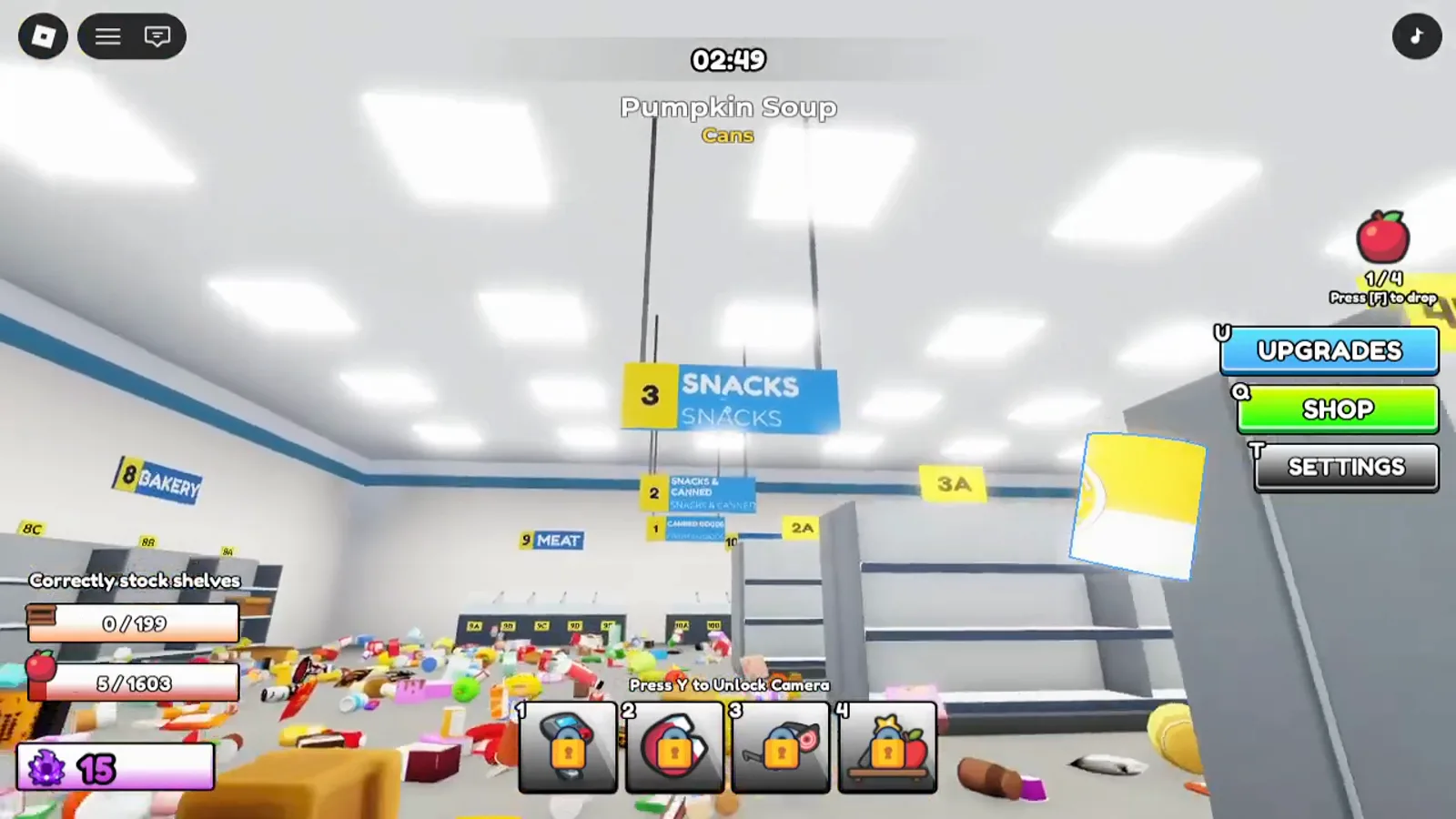
Ask a Clean the Supermarket player how the first attempt went, and the honest answer is usually chaos: grabbing whatever was nearest, crossing the store a hundred times, ending the session with two aisles untouched. The players who finish fast do something different — they treat a completion run as a planning problem with a checklist, a route, and a log.
This guide uses the tools on this site — the twelve aisles, the Price Scanner, and the Item Locator — then shows why the same framework transfers to Roblox games built around rooms, badges, or multiple endings.
Step 1: Write the target checklist before you queue
A completionist run fails at the planning stage more often than in play. Before you join a server, write down every objective the run must cover. In Clean the Supermarket that list is concrete: the progress milestones, the full-store completion badge, and the timed speed badges. The Badges page is the reference for what exists — turn it into your personal checklist.
Two rules keep the checklist useful:
- One line per objective, one owner per line. Playing with a squad, assign each line a name — two people sweeping the same aisle is wasted overlap.
- Mark dependencies. Speed badges assume you can already complete a full clean, so they sit below the completion badge on the list, not beside it.
Keep the list short enough to read between shifts.
Step 2: Group targets into routes
A checklist tells you what to do; a route tells you in what order. The grouping principle is spatial: objectives that share floor space belong in the same pass. Clear the twelve aisles in zones — large, recognisable items first, small bottles last — because every diagonal walk across the store is time you could have spent shelving.
The same logic decides when you buy tools. The Price Scanner highlights every copy of the item you are holding, turning search-heavy aisles from a hunt into a walk. Buy finding tools before movement tools — the upgrade order page explains why, and your route should account for when those upgrades come online.
The output is an ordered route with each checklist line attached to its zone.
Step 3: Sweep zones, don't wander
With a route in hand, execution is sweep discipline: enter a zone, clear it completely, then leave. The enemy is the half-finished aisle — a shelf one item short pulls you back across the store later, and the return walk costs more than the original clear.
Two habits keep a sweep honest:
- Read labels before you walk. Wrong placements are the most expensive mistake in the game, because you pay for the trip twice.
- Look things up instead of guessing. When an item's category is not obvious, the Item Locator tells you which aisle it belongs to. A ten-second lookup beats a wrong walk every time.
When one item refuses to appear, move to the next zone and come back later — fresh items surface as you shelve elsewhere.
Step 4: Log checkpoints as you go
Completion runs are long, and memory is a bad database. Log progress at fixed checkpoints: zones fully cleared, checklist lines done, time elapsed. Chasing a timed badge, note the moment the store loads and check the clock at every zone boundary — the timer does not pause in menus.
Checkpoint logs stop you re-clearing finished zones, show whether you are on pace, and turn a failed run into data instead of a bad feeling. The Speed Runner badge guide shows what serious logging looks like when the margin is measured in minutes.
Step 5: Review every failed run
After each failed run, answer three questions while the session is fresh:
- Where did the time actually go? The honest answer is usually search time in one or two aisles, not walking speed.
- Which mistakes repeated? One wrong shelf is bad luck; the same variant confusion three runs in a row is a knowledge gap, and it has a fix.
- What changes next? One or two changes only — change everything at once and you cannot tell what helped.
Then update the checklist and the route, not your memory. Harder rule sets raise the stakes on this loop: on hard mode the margin for wasted trips shrinks, and players who skip the review stall out.
The same method works in other Roblox games
Nothing in the five steps is specific to supermarkets. Any Roblox game that asks you to finish everything — clear every room, earn every badge, see every ending — rewards the same loop: checklist, route grouping, zone sweep, checkpoint log, failure review. The vocabulary changes; the structure does not.
In a game built around rooms and branching endings, your checklist becomes the room list plus the badge and ending objectives you are chasing. Route grouping becomes a per-room pass order that minimises backtracking. Checkpoint logging becomes a record of which rooms and objectives each attempt cleared, so a failed run costs minutes instead of the whole session.
If you play Shred the Secrets, the Shred the Secrets run tracker records progress room by room or objective by objective during a run — the checkpoint-log step from this guide, turned into a tool. The same site also maintains a route planner, an upgrade optimizer, and reference pages for endings, badges, rooms, classes, and guides, which map neatly onto the other four steps.
The point is not the tool — it is the habit. Players who log their runs finish games that players who wing it abandon.
The completionist checklist
Print this, adapt it, and keep it next to your screen:
- [ ] Every objective listed, one line each, dependencies marked
- [ ] Objectives grouped into an ordered route by zone or room
- [ ] Finding and information tools acquired before movement tools
- [ ] Each zone swept completely before moving on
- [ ] Unknown items looked up instead of guessed
- [ ] Checkpoints logged: zones cleared, objectives done, time elapsed
- [ ] Failed runs reviewed: where time went, which mistakes repeated, what changes next
- [ ] Checklist and route updated after every run
Completion badges look like endurance tests from the outside. Up close they are bookkeeping. Plan the run, log the run, review the run — and the rarest badge on your profile stops being rare for you.